Brazilian and European Portuguese: What is the Difference?



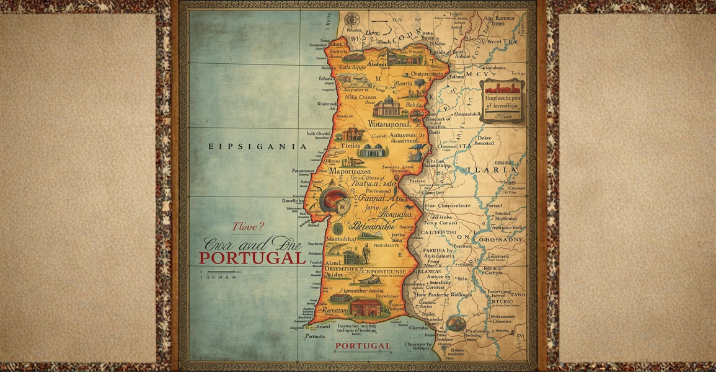
Curious and wondering where did the Portuguese language come from? Just like every language has its brief history, it also has very long and fascinating history that stretches over 2000 years. Portuguese originated from Latin, the language brought by the Romans in Iberian Peninsula. After many centuries it was influence by local cultures and historical events, and time passes where Portuguese language origin spread across the globe and now it is spoken today in South America, Europe and parts of Asia.
Portuguese is undeniably a Latin language that is the part of the Romance language family. During 3rd century BCE when the Roman empire was expanding into the Iberian Peninsula, Latin became the dominant language of the invaded region.
Time passes and people start speaking “Vulgar Latin” a simpler everyday classical version of Latin and these roots of Portuguese language form eventually transformed into several Romance languages including Portuguese, Spanish, French and Italian.
As
Before roman invasion, that region was home of various Celtic and Iberian groups and their language influenced early Latin that subtle but important ways:
You were thinking who are Celtic group and Iberian actually they are the native who live there before the roman invasion and early peoples helped to shape the earliest form of the language before it becomes Portuguese.
The romans invasion transformed the Iberian peninsula’s culture, administration and language. Where their government announces Portuguese a Latin language that officially use for education, law and trade.
As roman influence deepened:
5th century CE where roman empire declining but Latin was developed in northwest with its own distinct character.
Have you heard about Galician Portuguese? Maybe but this version of Latin spoken in today’s northern Portugal and Galicia (Spain) this was developed in between 9th to 12th centuries.
This early language becomes famous for literary works especially in medieval courts which widely used for:
Galician – Portuguese was the common language for region before political borders separated Galicia (Spain) and Portugal. This split give birth to modern Portuguese.
When Portugal became independent in 12th century, the language began developing its with its own identity obviously separate from Galicia.
Historical events that shaped modern Portuguese language:
After becoming the separate kingdom of Portuguese in 15th century it becomes fully established and recognized language.
During Reconquista period that was the time when the Christian kingdoms gradually expanded in south reclaiming territory from Muslim rulers (moors). This expansion introduced new influences from gothic tribes, Arabic speakers and local peoples.
During the age discoveries (15th – 16th centuries) sailors from Portuguese travelled across the world also taking their language with them and this era dramatically expanded the language’s geographic presence.
Portuguese spread to:
Today, Portuguese language has different varieties depending on region where it is spoken. The two most recognized forms are European Portuguese (form Portugal) and Brazilian Portuguese (from Brazil). Which come from the same language but later developed in unique characteristics over time.
Both varieties are mutually intelligible – speakers can understand each other however they differ in:
From ancient Latin roots to become globally speaking language has very long journey even more than 260 million people speaks, Portuguese has undergone an extraordinary journey which developed and reflects centuries of cultural exchange, exploration and adaptation.
Today, Portuguese continues grow in global importance especially in Brazil which is one of the world’s largest economies. Whether you are learning it for travel, work or personal interest and understanding its history gives you deeper appreciation of its beauty and richness.
1. Is Portuguese similar to Spanish?
Yes, both languages come from Latin and belong to the Romance language family. They share much vocabulary, though pronunciation and grammar differ.
2. Why did Portuguese spread outside Europe?
Portuguese traveled across the globe during the 15th–16th centuries for trade and exploration, which helped expand the language worldwide.
3. Which countries speak Portuguese today?
Portuguese is the official language of nine countries across Europe, South America, Africa, and Asia. These Portuguese-speaking countries are known as Lusophone.
4. Is Portuguese influenced by Arabic?
Yes, due to centuries of Moorish presence in the Iberian Peninsula, many Portuguese words were influenced by Arabic.
5. What alphabet does Portuguese use?
The Portuguese language uses the 26-letter Latin alphabet.

To keep up with this era of fast-paced globalization, the one skill that remains timeless is learning languages. It continues to be one of the most highly-paid career paths available. So if you are seeking a 100% placement guarantee, just indulge with us in a world full of foreign languages.
CIN - U85500DL2024NPL433420
ISO - 9001-2015