
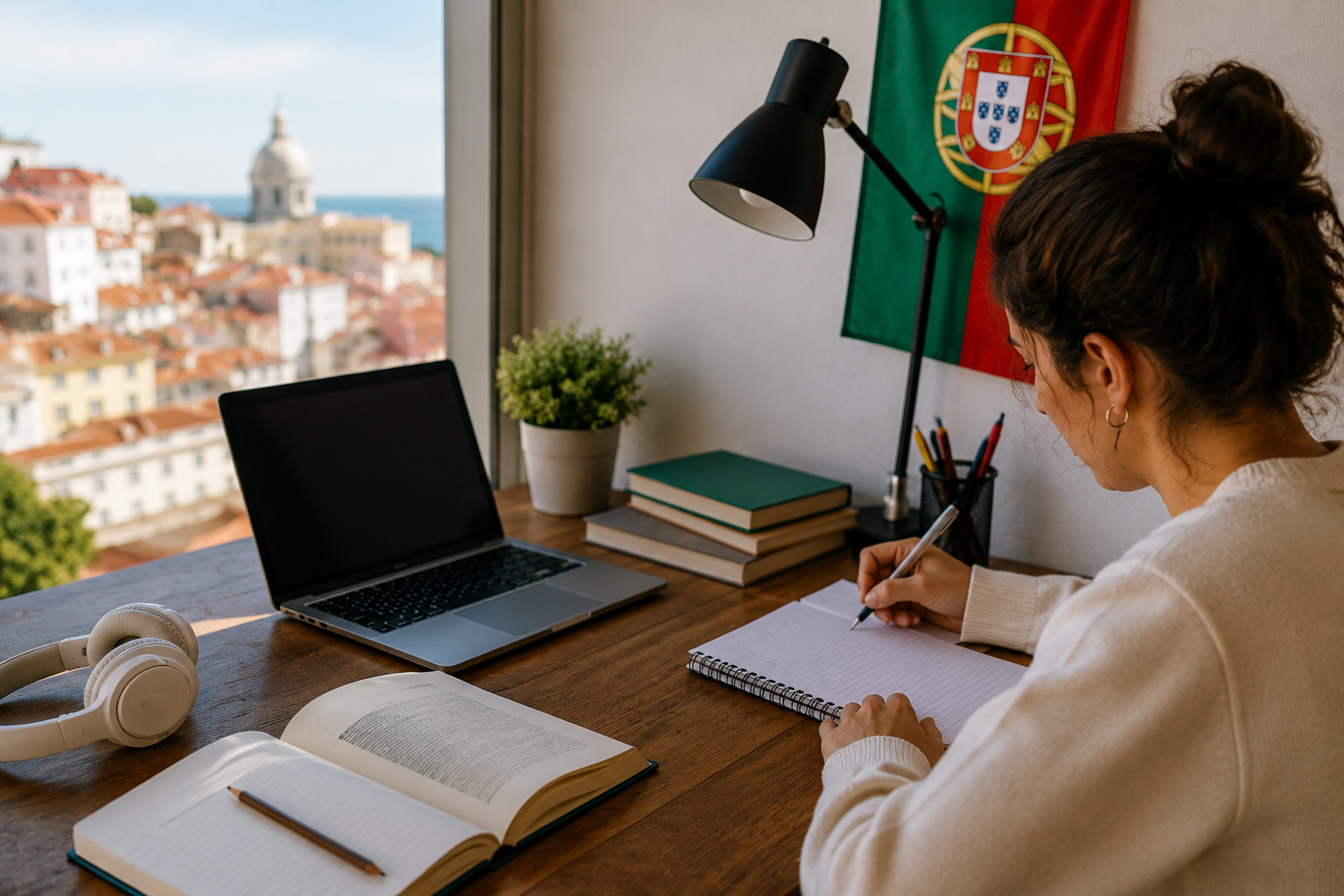
If you are planning to study, work, or apply for citizenship in Portugal, passing the Portuguese language test can be an important step. The A2/CIPLE exam checks whether you can understand and use basic Portuguese in daily life.
Many beginners feel nervous before the exam, but with the right preparation and regular practice, it becomes much easier. In this guide, you will learn practical tips, study methods, and useful resources for Portuguese language test preparation.
The CIPLE exam is an official Portuguese language certification for beginners. It is designed for learners who have basic communication skills in Portuguese.
The A2 level means you should be able to:
● Introduce yourself
● Ask and answer simple questions
● Understand everyday conversations
● Read short texts and messages
● Write basic sentences and emails
This exam is commonly required for:
● Portuguese citizenship applications
● Residence permits
● Study opportunities
● Work purpose
In this part, you read short texts such as:
● Advertisements
● Emails
● Notices
● Messages
You may answer multiple-choice questions or match information.
Example:
You read a restaurant menu and answer questions about prices or timings.
The writing test checks your ability to write simple Portuguese sentences.
You may be asked to:
● Write a short email
● Fill out a form
● Describe your daily routine
Common mistake:
Many students use very long sentences and make grammar mistakes. Keep your writing short and simple.
You listen to short conversations and answer questions.
Topics usually include:
● Shopping
● Travel
● Daily activities
● Directions
Tip:
Practice listening to slow Portuguese audio every day to improve understanding.
This section tests basic conversation skills.
You may need to:
● Introduce yourself
● Talk about family or hobbies
● Answer simple questions
Example questions:
● Onde mora?
● O que faz no tempo livre?
Speak clearly and slowly. Confidence is more important than speaking fast.
You do not need advanced grammar for the A2 CIPLE exam preparation. Focus on common beginner topics like:
● Present tense verbs
● Gender of nouns
● Basic sentence structure
● Question words
Example:
● Eu trabalho em Lisboa.
● Ela gosta de música.
Practice one grammar topic daily instead of studying everything together.
Learn words used in daily conversations.
Focus on topics like:
● Food
● Travel
● Family
● Numbers
● Shopping
● Time and dates
A good habit is learning 5 to 10 new words every day.
Listening is difficult for many beginners because native speakers talk quickly.
To improve:
● Listen to Portuguese podcasts
● Watch beginner-friendly YouTube videos
● Repeat sentences aloud
● Use subtitles in the beginning
Even 15 to 20 minutes of listening practice daily can help a lot.
Speaking practice is important for building confidence.
You can:
● Practice with friends
● Join online language groups
● Record your voice
● Repeat common conversations
Try speaking simple Portuguese sentences during your daily routine.
Example:
● Vou ao mercado.
● Preciso de café.
● Hoje estou cansado.
Mock tests help you understand the exam format and timing.
Benefits of solving practice papers:
● Improves speed
● Reduces exam fear
● Helps identify weak areas
● Builds confidence
During your portuguese language test preparation, try solving at least one mock test every week.
Some beginner-friendly apps include:
● Duolingo
● Memrise
● Practice Portuguese
These apps help with vocabulary and listening practice.
Popular beginner books include:
● Portuguese Grammar Made Easy
● Complete Portuguese Beginner Course
Choose books with exercises and audio support.
Many websites provide:
● Listening exercises
● Reading practice
● Sample tests
● Vocabulary quizzes
These are useful for regular revision.
Joining structured classes can make learning faster.
A good teacher can help you:
● Correct pronunciation
● Improve speaking confidence
● Understand grammar clearly
● Prepare for the real exam format
Daily practice is better than studying for long hours once a week.
Even 30 minutes daily can improve your skills quickly.
Do not try to sound perfect. The exam checks whether you can communicate basic ideas clearly.
Simple and correct sentences work best.
Mock exams help you manage time and reduce nervousness before the actual test.
Try practicing under real exam conditions.
Memorizing useful daily expressions can improve both speaking and listening skills.
Examples:
● Bom dia
● Quanto custa?
● Onde fica?
● Preciso de ajuda
Preparing for the Portuguese A2/CIPLE exam becomes easier when you follow a simple daily routine and practice consistently. Focus on basic communication, everyday vocabulary, listening practice, and mock tests.
Remember, the goal is not perfect Portuguese. The goal is to communicate confidently in everyday situations.
If you are looking for professional guidance, Linguapol offers beginner-friendly Portuguese language classes designed to help students prepare for the CIPLE exam with confidence.
The CIPLE exam is considered beginner level. With regular practice and proper preparation, most learners can pass comfortably.
For most beginners, preparation may take around 3 to 6 months depending on study time and practice consistency.
The exam usually includes daily life topics such as shopping, travel, family, work, hobbies, food, and simple conversations.
Yes. The exam is specially designed for beginners who can communicate using basic Portuguese sentences and everyday vocabulary.

Instructor: Mrs Raka Adhikari

Lectures: 42

Duration: 12 Weeks

Enrolled: 20 Students

Language: Portuguese
Medium of Instruction: English & Hindi

To keep up with this era of fast-paced globalization, the one skill that remains timeless is learning languages. It continues to be one of the most highly-paid career paths available. So if you are seeking a 100% placement guarantee, just indulge with us in a world full of foreign languages.
CIN - U85500DL2024NPL433420
ISO - 9001-2015