
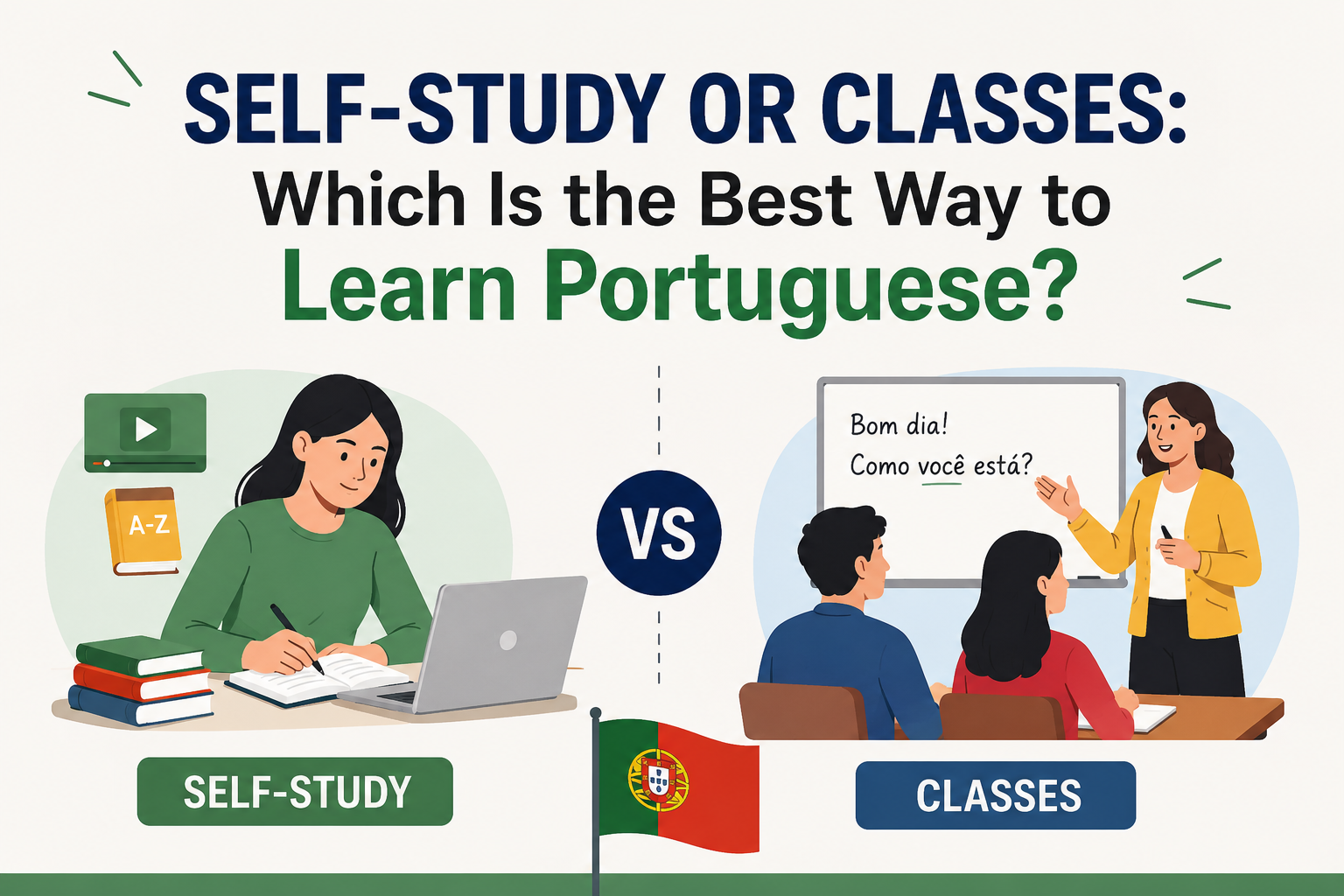
Many beginners feel confused when starting Portuguese. Some prefer learning on their own with apps and videos, while others choose structured language classes.
The truth is that both methods can work well. The right choice depends on your learning style, schedule, goals, and motivation level.
In this guide, we will compare self-study and Portuguese classes in a simple and practical way to help you decide the best way to learn Portuguese.
Choosing the right learning method can make language learning easier and more enjoyable.
Some learners improve faster with guidance, while others prefer flexible self-paced learning.
The right method helps you stay productive and focused.
Regular speaking practice is important for fluency.
Your learning style can affect how comfortable you feel while speaking Portuguese.
A study method that matches your lifestyle makes it easier to stay motivated and consistent.
Self-study means learning Portuguese independently without attending formal classes.
Most self-learners use:
● Language apps
● YouTube videos
● Podcasts
● Flashcards
● Grammar books
● Online exercises
Some learners also practice speaking with language exchange partners.
You can study anytime and anywhere.
This is helpful for people with busy routines.
Many self-study resources are free or affordable.
You can learn without spending too much money.
You can repeat lessons and focus more on topics you find difficult.
For example, you may spend extra time practicing pronunciation or vocabulary.
Many beginners do not know what to study first.
This can create confusion and slow progress.
Some learners spend too much time reading and listening but rarely speak.
Without guidance or accountability, consistency can become difficult.
Portuguese classes are structured lessons taught by teachers online or offline.
Classes follow an organized plan, which helps beginners understand what to learn step by step.
Most classes include conversation activities and pronunciation practice.
This improves confidence faster.
Teachers can correct mistakes early before they become habits.
For example:
● Pronunciation errors
● Grammar mistakes
● Sentence structure issues
Scheduled classes help learners stay consistent.
Classes happen at fixed times, which may not suit everyone.
Professional language classes can be more expensive than self-study resources.
Some learners may feel classes move too slowly or too quickly.
| Feature | Self-Study | Portuguese Classes |
| Flexibility | High | Moderate |
| Cost | Lower | Higher |
| Structure | Limited | Organized |
| Speaking Practice | Depends on learner | Regular |
| Teacher Feedback | Minimal | Available |
| Motivation Support | Self-driven | Guided |
The best way to learn Portuguese depends on your learning habits and goals.
Self-Study Is a Good Option If:
● You are highly motivated
● You prefer flexible learning
● You enjoy independent study
● You have a busy schedule
● You want affordable learning options
● You need guidance and structure
● You want regular speaking practice
● You struggle with consistency
● You prefer learning with a teacher
● You want faster feedback and correction
For many learners, combining both methods works best.
Attend classes for:
● Structured learning
● Speaking practice
● Teacher guidance
Use self-study for:
● Vocabulary revision
● Listening practice
● Daily exercises
● Extra reading and speaking
This balanced approach often helps beginners improve faster and stay consistent.
Structured learning creates a clear roadmap and reduces confusion.
It also helps learners:
● Build strong basics
● Practice regularly
● Improve speaking confidence
● Avoid common beginner mistakes
For learners looking for guided Portuguese learning with practical speaking support, Linguapol offers structured classes designed to help beginners learn step by step with confidence.
There is no single perfect method for everyone. Some people succeed with self-study, while others learn faster through classes.
The key is to choose a method that matches your goals, schedule, and learning style. Most importantly, stay consistent and practice regularly.
With patience and daily effort, learning Portuguese becomes much easier and more enjoyable.

Instructor: Mrs Raka Adhikari

Lectures: 42

Duration: 12 Weeks

Enrolled: 20 Students

Language: Portuguese
Medium of Instruction: English & Hindi

To keep up with this era of fast-paced globalization, the one skill that remains timeless is learning languages. It continues to be one of the most highly-paid career paths available. So if you are seeking a 100% placement guarantee, just indulge with us in a world full of foreign languages.
CIN - U85500DL2024NPL433420
ISO - 9001-2015